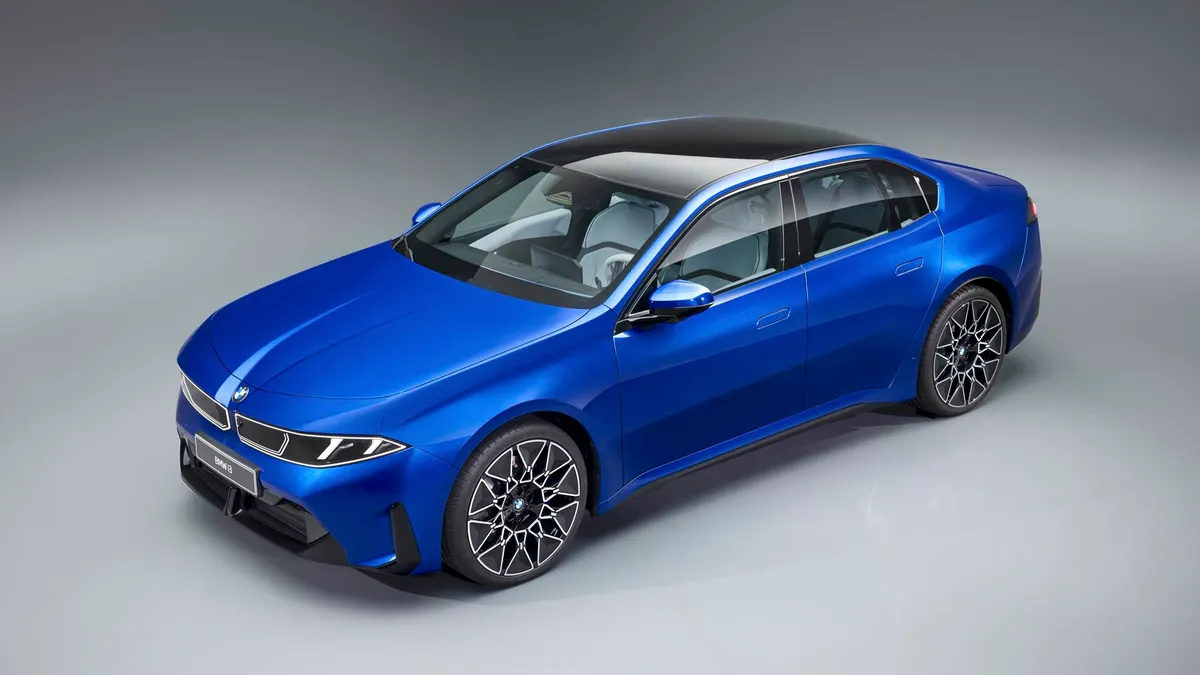
MUNICH – BMW has revealed its new i3 sedan, the first fully electric interpretation of the automaker’s signature 3-series sedan developed and planned for global sales and, almost certainly, a rivalry versus the Tesla Model 3.
U.S. consumers may already know the i3 name, which was first used in 2013 on a quirky compact EV built on an aluminium chassis and carbon-fiber reinforced plastic passenger cell. But the i3 unveiled by BMW Group’s outgoing CEO Oliver Zipse in Munich on Wednesday hews to the styling and technical direction originally previewed by the Vision Neue Klasse concept in 2023, not that previous i3.
While the i3 sedan’s indirect predecessor, the i4 hatchback, was built on a modified combustion-engine platform, this distinctive sedan is based on an entirely new structure that Zipse said will underpin at least six new electric models by the end of the decade. This distinctive sedan also adopts BMW’s sixth-generation eDrive technology, together with a newly developed battery using cylindrical cells and an 800-volt electrical system — all aimed at delivering significant gains in efficiency, range and charging performance over the i4.
North American sales of BMW’s new electric sedan are scheduled to begin by the end of 2026. It will sell alongside an upgraded version of the gasoline-powered 3-series sedan.
Big gains in range and charging
BMW says the i3 will deliver up to 30% greater driving range and 30% faster charging compared with the i4, with 4695-format (46 mm wide by 95 mm tall) cylindrical lithium-ion cells featuring higher nickel content and reduced cobalt levels in the cathode together with increased silicon content in the anode compared with the earlier prismatic cells used in BMW’s fifth-generation eDrive system.
Cells are integrated directly into the battery pack using a cell-to-pack layout, eliminating the module structure used previously and allowing the battery to function as a structural element for increased body stiffness.
Details on the i3 sedan’s battery capacity have not yet been made official, although BMW boasts driving ranges of approaching 560 miles on the WLTP cycle for the most efficient single-motor rear-wheel drive i3 sedan model.
The i3 is built on an 800-volt electrical architecture, enabling DC fast-charging rates of up to 400 kW. Under optimal conditions, this allows the battery to recover up to 250 miles of driving range in around 10 minutes on compatible high-power chargers, according to BMW.
The battery system also supports bidirectional charging, allowing the i3 to supply electricity to external devices, homes or the electrical grid.
As with the recently introduced iX3, the i3 uses two different electric motor technologies within the drivetrain. The rear axle employs a synchronous motor that avoids the use of permanent magnets and rare earth materials, while the front axle uses an asynchronous motor. The combination allows the drivetrain to balance efficiency and performance depending on operating conditions, according to BMW.
Alongside the initial four-wheel drive model, rear-wheel drive versions with a single rear-mounted electric motor are also planned to be added to the i3 lineup over time.
At launch in the US, the new electric sedan will be offered in i3 50 xDrive form, using a dual-motor electric drivetrain that provides it with four-wheel drive capability. Combined output is rated at 469 hp and 476 lb-ft of torque. This compares to the 396 hp and 443-lb ft of the facelifted i4 xDrive40 launched in 2024.
Neue Klasse design language
The i3 adopts contemporary Neue Klasse design language first previewed by the Vision Neue Klasse concept and carried into production with the iX3 SUV.
The front is dominated by what BMW describes as a digital fascia made up of two black panels incorporating illuminated graphics that reinterpret the brand’s traditional kidney-shaped grille for EVs, in a way that emphasizes the design’s width. Headlamps follow BMW’s familiar twin corona ring lighting signature with hockey-stick-shaped LED elements set at a slight angle, and the hood incorporates a scalloped central section framed by subtle creases, with the BMW roundel positioned at the leading edge above the grille.
In profile, the i3 has a profile that deliberately references earlier generations of the 3-series, with clean sides, minimal surface detailing, and retractable door handles sitting flush for aerodynamic efficiency.
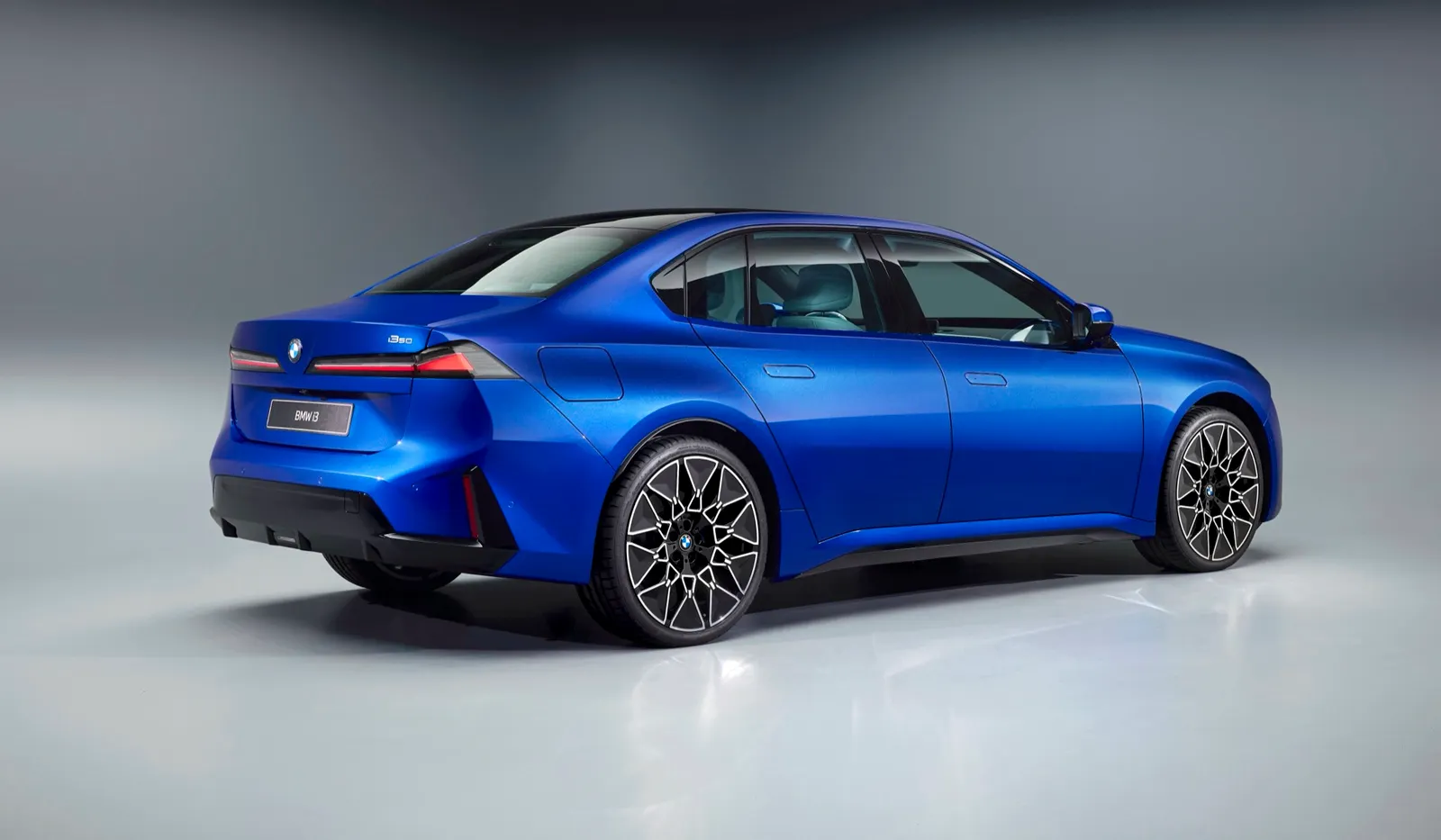
At an official 187.4 inches long, 73.4 inches wide, and 58.3 inches high, on a 114.1-inch wheelbase the i3 sedan is slightly larger all around versus the current gasoline 3-Series.
BMW plans to broaden the model family beyond the sedan. A wagon version, the i3 Touring, is planned to follow in 2027 for selected global markets, extending the electric 3-Series range into the same form factor long occupied by the internal combustion engine 3-Series Touring.
New cabin design and digital operating system
As with the exterior, the i3’s cabin marks a clean break from today’s internal-combustion 3-Series but one that doesn’t veer far from BMW familiarity. And it closely follows the design direction established by the related iX3.
The dashboard is cleaner than before, with the fascia flowing into the door panels to create a wraparound effect, while larger glass areas and an optional panoramic roof enhance the sense of space and light.
At the center of the new layout is BMW’s Panoramic iDrive system. It combines four main elements: BMW Panoramic Vision, which projects information across the entire width of the lower section of the windscreen; an optional 3D head-up display; a 17.9-inch rhombus-shaped central display; and a newly designed multifunction steering wheel with illuminated controls.
BMW says the idea is to place key driving information directly in the driver’s line of sight while reducing the need for a traditional instrument cluster, which disappears entirely. The lower section of the center console still houses a selector lever, an inductive charging tray and physical buttons for key functions such as the parking brake and hazard lights.
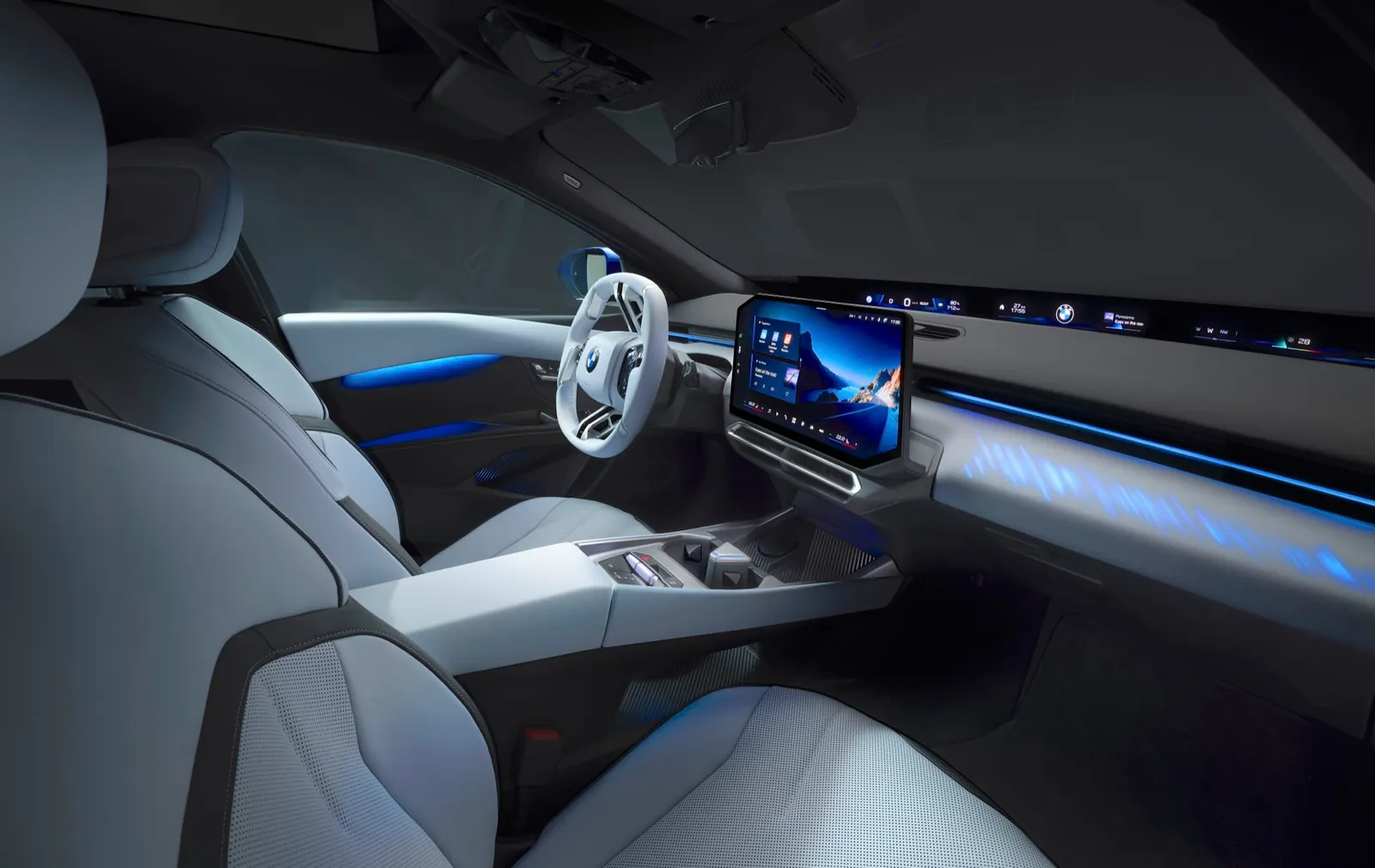
The i3 runs BMW’s new Operating System X and supports BMW ID personalization for up to seven users. A digital assistant gains large language model capability through Amazon Alexa+ integration, allowing more natural voice interaction and expanded cloud-based functions than that of the i4. The updated system is also designed for ongoing over-the-air software updates.
The i3’s dedicated electric platform has allowed it to make fuller use of the available interior volume. A flat floor, long wheelbase and wide cabin all contribute here, providing it with greater accommodation and space than the internal combustion engine 3-series, and as with the iX3 SUV, the i3 sedan’s rear luggage compartment is supplemented by a small frunk at the front.
i3 production also pivots on heritage
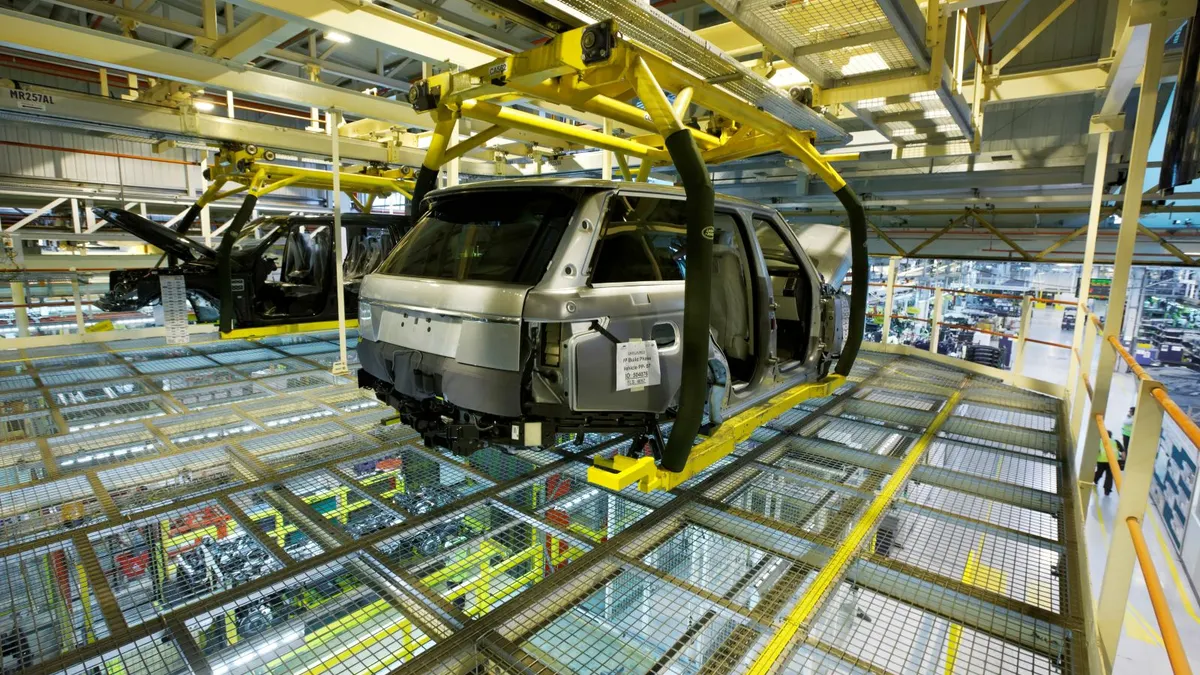
Production of the i3 sedan is set to take place at BMW’s Munich plant in Germany beginning in August 2026. The historic plant, which began building cars in 1952, has undergone major reconstruction over the past four years, including the installation of a new body shop and assembly area designed to support Neue Klasse electric vehicle production.
BMW’s wider production setup for the i3 also reflects its strategy of spreading Neue Klasse manufacturing across multiple European sites: the rear axle is produced at BMW’s plant in Steyr, Austria; the battery comes from a new facility in Debrecen, Hungary; and the battery control unit is supplied by BMW’s Landshut plant near Munich.