Editor’s note: This is a reported column, in which Steve Finlay periodically explores the relationship between automakers and dealers for WardsAuto.
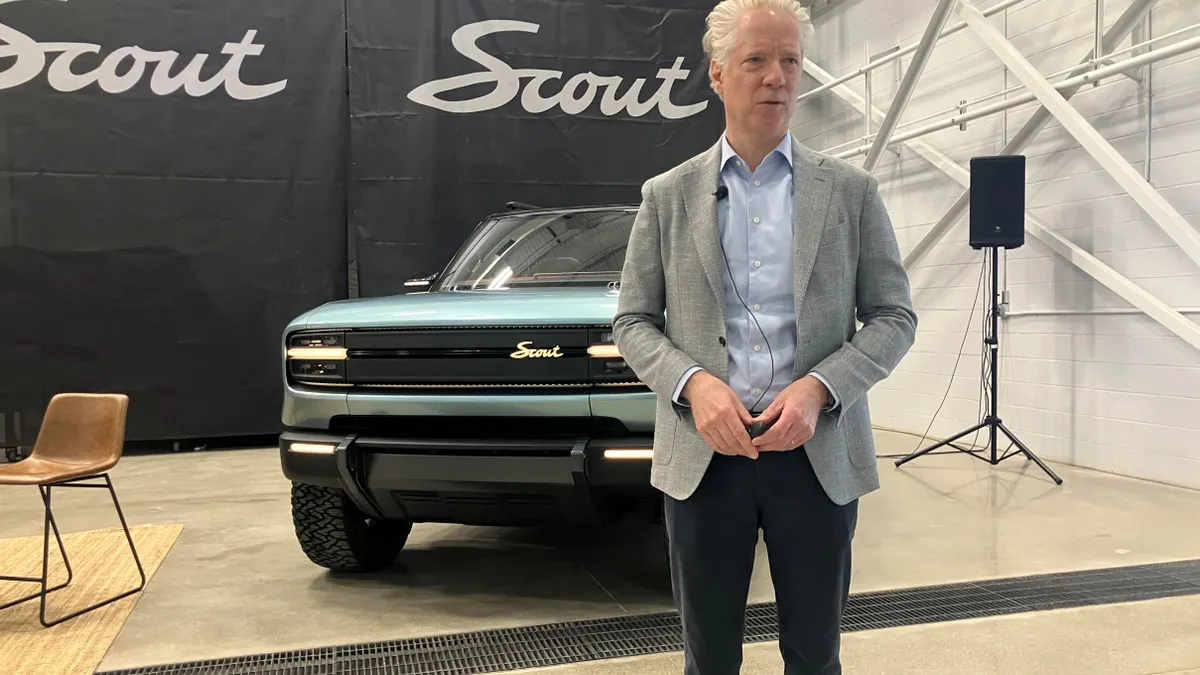
NOVI, Mich. – Scout Motors president and CEO Scott Keogh put his old PR skills to work while touting his fledgling Volkswagen Group brand, which has irked the dealership world long before it’s sold a single vehicle.
Earlier this month, Keogh pitched the nascent brand to an Automotive Press Association audience at the Scout Innovation Center, in a Detroit suburb.
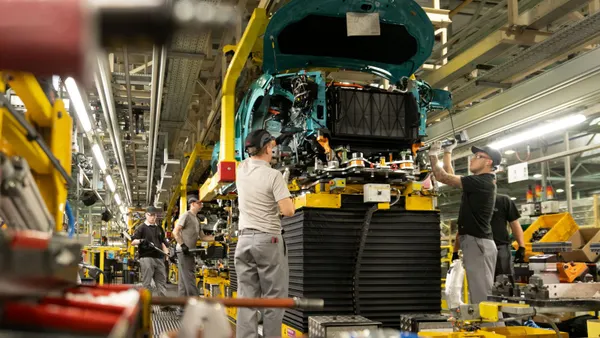
Elsewhere, a Scout factory is under construction in South Carolina. And Charlotte, N.C., will serve as headquarters. The three-year-old spinoff/startup automaker plans to go to market in 2028 with two electric vehicles: a midsize SUV (Traveler) and a pickup truck (Terra).
The VW Group means business with Scout Motors, and another order of business for Scout will involve fending off lawsuits from dealers and dealer groups. They’ve bridled at Scout’s plan to bypass the traditional franchised dealership network and instead sell directly to consumers.
Keogh has held executive positions at VW of America and Audi of America for the past 20 years. Before that, he was in public relations at Mercedes-Benz USA.
Heading a startup has been a trip, he said. “For me, it’s unnerving, crazy. But absolutely a dream.”
International Harvester introduced the original Scout pickup in 1960. The company used the dealership system and pulled the plug 20 years later. It said it wanted to focus more on agricultural and industrial products.
In traditional franchised auto retailing, which is how the vast majority of vehicles are sold in the U.S., “direct to consumers” are fighting words.
The German-based VW Group includes many brands. In addition to VW, Audi, Porsche, Bentley and Lamborghini are among them. They are all sold through dealers in America.
In shunning the franchise system, Scout has sparked dealer lawsuits across America. The latest is a class-action filing in a U.S. District Court in Virginia. The plaintiffs allege Scout’s retailing approach violates dealer franchise law.
At issue is whether Scout, which has no franchised dealers lined up in the first play, nonetheless is subject to franchise laws because of its VW Group ties.
Hot-button words in the Virginia filing included “breach of contract” and “conspiracy to injure a business relationship.” The gloves are off.
The National Automobile Dealers Association and California New Car Dealers Association got in on the legal action with their own court filings.
Despite all that, direct-to-customer sales are “100% of the plan,” Keogh insisted. He lauded the non-franchise model as a way to improve operational efficiencies, heighten customer experiences and rapidly feed consumer-data “insights” back to HQ.
Moreover, it would give Scout “profound control over the cash register,” Keogh said.
In the traditional franchise system, automakers sell cars wholesale to dealers who, in turn, sell them at a higher retail price to consumers, then pocket the difference.
The Scout plan would eliminate the middlemen and collect retail revenue right from buyers.
After his presentation, I asked Keogh if both ways to sell cars — factory-direct and through franchised dealers — are viable.
“Yeah,” he said. “The dealer world is viable. And the direct-to-consumer world is viable.”
So, everyone evidently is a winner — as they say before announcing an actual winner.
As to the number of Scout sales outlets and their locations, he said in his presentation: “We’re working that out. You don’t want to over-build — or under-build.”
Keogh reasoned through the decision behind the model: “You have, say, a $65,000 asset. You want to get that asset into a buyer’s driveway as quickly as possible. We looked at what’s the best way we can do that. We came up with direct sales.”
Scout will debut its SUV and truck because both are in hot American vehicle segments.
But Sam Abuelsamid, vice president of market research for consulting firm Telemetry, qualifies that with a reality check.
“The pickup market hasn’t grown that much in 20 years,” he told me at the same event. “Chances are slim that it will suddenly start significantly growing.”
So, expect efforts at conquest sales, he anticipates, which means taking sales away from Ford, GM and Stellantis.
“It’s going to be tough for Scout,” Abuelsamid summed. “Especially when you have a truck that’s electrified. None of those have gained traction in the marketplace.”
And about that direct-to-consumer model?
“I understand why Scout wants to go that way,” he said. “All the legacy automakers have had challenges with traditional dealers selling EVs.”
Another issue: Startup EV makers, including Tesla and Rivian, struggle on the service side because they operate only a limited number of repair and maintenance facilities. That dearth can turn off customers who don’t want to take a road trip to get their cars fixed.
Abuelsamid floated a possible way Scout could meet the service challenge: “Let VW, Audi and Porsche dealers sign up to be Scout service centers, too.”
Perhaps it could work. But, he said, “It’s probably not going to happen.”