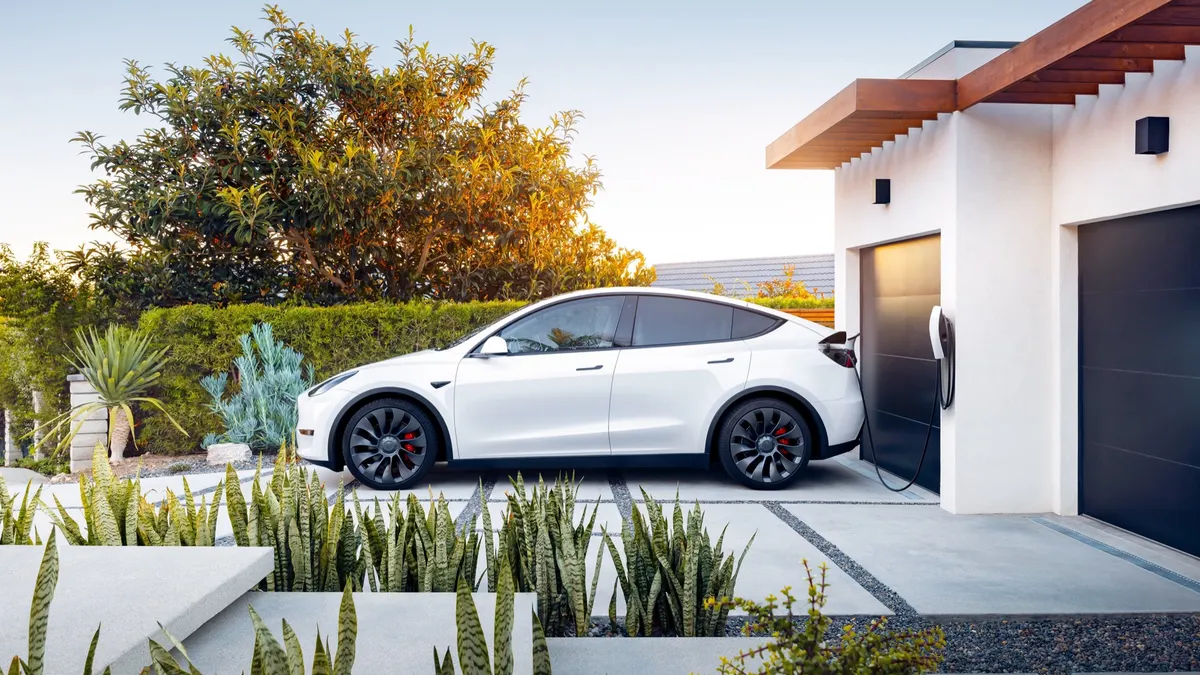
Electric vehicle owners charge at home the vast majority of the time. And yet preparing for that reality often takes second stage to range anxiety and readying for the road-trip charging that might be a relative rarity.
As JD Power underscored in results from its 2026 U.S. Electric Vehicle Experience Study, which was released Tuesday, dealers should be doing more to educate customers about their home-charging options.
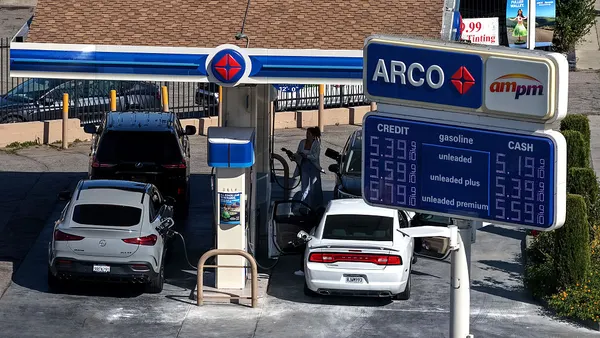
Partly it’s a matter of rising costs. According to JD Power, EV owners spent an average of $63 on home-charging over a 30-day period, up $5, or nearly 9%, from just a year ago. Thus, satisfaction with the cost of charging has fallen significantly. The study looked at 5,399 owners of 2020-2026 model EVs and plug-in hybrids and was conducted from November 2025 through February 2026, so it doesn’t include the relative effect of much higher gas prices.
The U.S. Energy Information Administration cites a national average residential electricity price of 18 cents per kilowatt-hour in 2026, up 37% from 2020. While the electric utility sector claims it’s working to address affordability issues, a range of reasons including data center buildouts have led to residential energy rates outpacing inflation.
EIA data also underscores that there’s a lot of regional variation in home charging costs. JD Power noted that owners in New England paid $99 over the past 30 days while those in its Mountain region paid just $36.
Because this varies so much by market, and we have nearly 3,000 electric utilities in the U.S., some of this help needs to come locally—from the dealership.
“Dealer representatives are front-line educators who are in the best position to convey local market nuances to consumers,” said Brent Gruber, executive director of the EV practice at JD Power, to WardsAuto via email. “This is particularly true when it comes to home charging for new EV owners. Installers, utility providers and savings programs and the like vary from market to market.”
Despite the potential payoffs, “only about 20% of owners say they received any kind of education or advice on home charging from their purchasing dealer,” according to Gruber. “Automakers, dealers and utility companies all have a role in helping owners understand options like utility incentives, programs and upgrading to Level 2 permanently mounted chargers, which have more advanced options for scheduling charging windows to maximize cost savings.”
Utilities are part of both the problem and the solution. There’s potentially a lot of money to be saved when EV drivers take advantage of scheduled charging features, which harness time-of-use and off-peak hours—and that means better satisfaction than JD Power saw in its study. Among those who regularly schedule charging, satisfaction is significantly higher, and Power notes that those who do so spent an average of $65 on charging over 30 days versus $71 for those who don’t.
Even better, wi-fi-connected smart chargers can tap into utilities’ variable electricity rates, potentially saving even more. JD Power notes that despite a higher rate of problems with this type of charger, over details like connectivity or apps, overall satisfaction is higher.
Tesla, which has a unified ecosystem matching up home charging with its vehicles, again ranked highest in this year’s EVX study from the firm. Emporia, ClipperCreek, Grizzl-E, and Wallbox all ranked above the industry average.
JD Power also saw somewhat higher satisfaction for units that were hardwired at 240 volts rather than those that plugged into a 240-volt outlet. That may simply be a matter of charging power and flexibility, as outlets are generally limited to 50 amps—enough for a 40-amp (9.6-kW) charger, but not the higher-power chargers that some luxury or performance EVs might support.
Meanwhile, relative satisfaction with Level 1 charging, at rates accommodated by a typical household 120-volt AC outlet, are down sharply versus last year, perhaps underscoring that it’s increasingly difficult to live with such a slow rate of charging for increasingly large EVs.
Being a reality check for customers and understanding that there’s no one-size-fits-all approach is part of the dealer’s role. “Proper education will require the participation of automakers, dealers, and utility providers, to ensure that guidance and education is provided to consumers in a way that makes it specific to the market and the consumer's needs,” Gruber added.