Dive Brief:
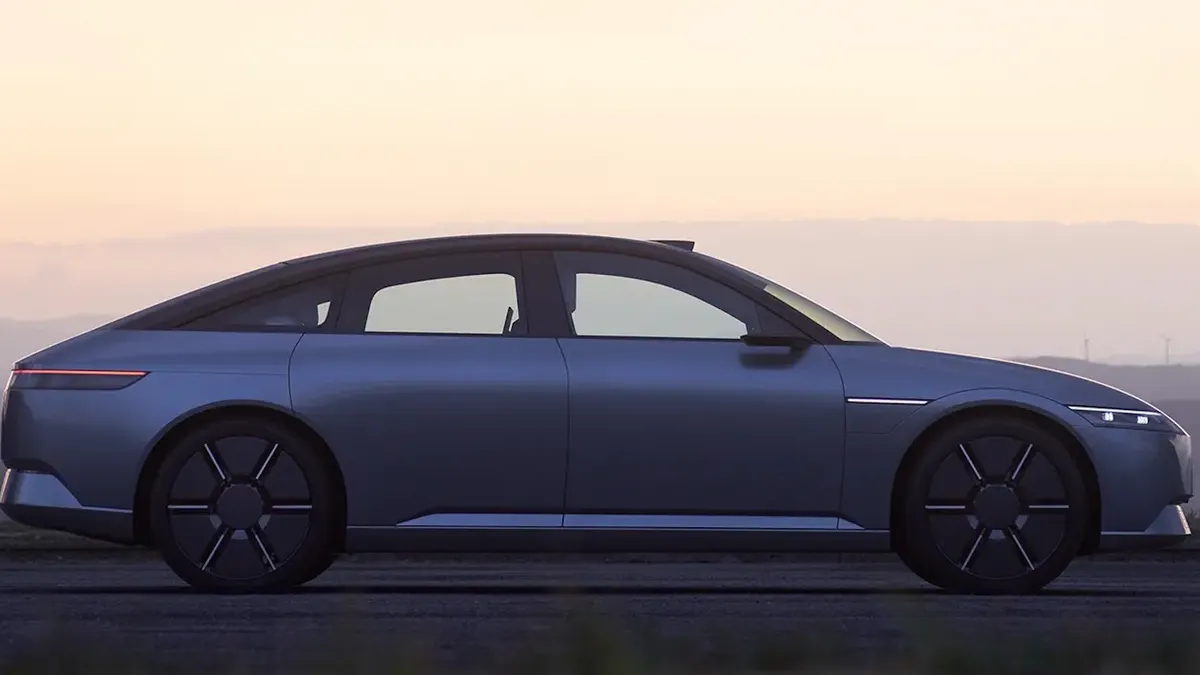
- Sony Honda Mobility, the electric vehicle joint venture between Honda Motor Co. and electronics manufacturer Sony, has canceled the launch of the Afeela 1 sedan and a second EV model, the companies announced in a joint press release.
- The joint venture was formed in 2022 to combine the technologies, expertise and development capabilities of Honda and Sony to launch software-defined EVs, but its future is now in question as the automaker reevaluates the partnership after posting billions of dollars of losses amid challenging market conditions.
- “As a result of Honda’s reassessment of its automobile electrification strategy announced on March 12, 2026, and factoring the changes to the EV market, the underlying assumptions of SHM’s business operations such as the utilization of certain technologies and assets planned to be provided by Honda were fundamentally altered,” the automaker said in the release.
Dive Insight:
The first planned EV model of the joint venture’s U.S. subsidiary — Sony Honda Mobility of America — was the “Afeela 1.” A production version of the electric sedan was unveiled at CES in January. The EV, which started at $89,990, was slated to be produced at the automaker’s assembly plant in East Liberty, Ohio, with customer deliveries beginning in California in late 2026.
In an interview with WardsAuto in January, Sony Honda Mobility of America CEO Shugo Yamaguchi appeared confident about the joint venture's focus on high-tech EVs, as well as its ability to turn a profit before the end of the decade.
“More than creating an electric vehicle as our target, we are creating a software-defined vehicle,” he told WardsAuto. “How the software evolves is an important part of our brand, more than just an EV itself.”
On March 21, Sony Honda Mobility of America even hosted the grand opening of its Afeela Studio & Delivery Hub in Torrance, Calif., inviting Afeela 1 reservation holders and other invited guests to the ribbon-cutting ceremony.
But earlier this month, Honda announced the cancellation of three other EVs for the U.S. market — the 0 Series Saloon, 0 Series SUV and Acura RSX. The decision followed a reassessment of the company’s electrification strategy, which Honda noted in its Feb. 10 earnings presentation.
Honda also revised its fiscal-year forecasts following a $1.7 billion loss in the first three quarters. The automaker expects reported expenses and losses of up to 2.5 trillion yen ($15.7 billion), which led the company to reevaluate its electrification strategy, including its joint venture with Sony.
Honda now plans to shift product development toward models with more profit potential, such as hybrids. The automaker announced its next-generation hybrid platform last fall, which includes a newly engineered body structure and modular architecture that enables greater parts commonality across models.
Although the joint venture has not been officially dissolved, Honda said in the release that it will continue to discuss and evaluate its future, taking into account its initial plans to launch high-tech EVs and the current market demand for those models.
Honda and Sony said they will jointly announce the future direction of Sony Honda Mobility, including its mid- to long-term positioning, “at the earliest possible opportunity.”