
The automotive industry was already fighting on multiple fronts before tariffs entered the equation. Software-defined vehicles were rewriting the engineering playbook. Chinese competitors were bringing new models to market in 12 months — a fraction of the 36 to 60 months required by traditional Western automakers. Battery electric vehicle demand was softening against overly optimistic forecasts, and an aging workforce was creating a widening skills gap. Then the tariff shock arrived.
The financial toll has been swift and steep. General Motors projects a tariff hit of $3.5 to $4.5 billion in 2025. Ford absorbed an $800 million second-quarter blow. Volkswagen is bracing for a €5 billion impact. Cox Automotive estimates the industry has collectively accumulated more than $25 billion in tariff obligations through just the first seven months of the year — roughly $5,200 per imported vehicle. For vehicles built in Mexico, a critical manufacturing hub, the added cost runs to approximately $4,800 per unit, effectively turning the build-in-Mexico business model upside down.
A new joint whitepaper from ServiceNow and KPMG, When Tariffs Hit an Industry in Transition, draws on in-depth interviews with industry executives and technology leaders to examine how digital technology — and particularly AI — is emerging as the automotive sector’s most powerful tool for navigating this era of compounding disruption.
The Problem Isn’t Sensing Risk — It’s Responding to It
One of the report’s most striking observations is that automotive companies aren’t failing because they lack risk management sophistication. According to Dean Ocampo, Director of Marketing at ServiceNow, the industry has some of the most mature risk-management processes of any sector. The problem is what happens next. “It’s not the sensing an issue that’s the problem,” Ocampo explains. “It’s the ability to quickly marshal all the moving parts in time to respond quickly.”
Complex matrix organizations, sprawling supply chains, and fragmented communication channels gum up decision-making at precisely the moment agility matters most. Meanwhile, as Len Prokopets, a KPMG managing director and supply chain expert, notes, tariffs have created a three-dimensional crisis: direct cost increases on materials and parts, deteriorating supplier financial health, and a massive internal administrative burden as OEMs must analyze, validate, and renegotiate thousands of individual supplier claims.
Four Spheres of Digital Response
The report argues that piecemeal technology solutions won’t cut it. What’s needed is a coordinated digital response across four interconnected areas.
The first is deploying AI and data analytics to map supplier networks with far greater depth — extending visibility beyond tier-one suppliers into tier-two and tier-three providers — and continuously modeling the impact of tariff changes. KPMG’s Tariff Modeler, one example highlighted in the report, allows executives to run real-time scenario analysis across customs data, pinpoint tariff exposures, and identify missed exemptions such as those available under USMCA. For one corporate user, switching to a compliant alternative supplier unlocked significant savings.
The second sphere is using automation and intelligent operations to create financial headroom. Back-office functions in HR, IT, procurement, and finance are prime targets. On the factory floor, IoT-enabled predictive maintenance and AI-driven quality checks are delivering measurable results — a recent academic study cited in the report found that IoT systems can cut energy consumption by 18% and reduce factory downtime by 22%. KPMG has also built a supplier claims management solution on the ServiceNow platform to streamline what has become, for many OEMs, an administrative crisis.
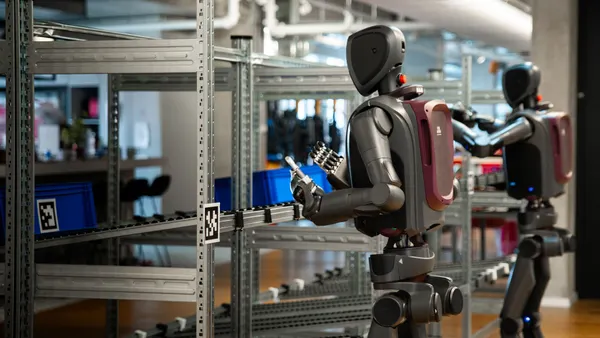
Organizational agility is the third area of focus. Agentic AI — autonomous systems capable of analyzing situations, making decisions, and triggering complex workflows — is emerging as a game-changer. The report envisions a future where AI agents negotiate directly with supplier agents, review contracts on the fly, and update financial models in real time, compressing what today takes hundreds of hours into near-instant action.
The fourth sphere is sustaining innovation. Despite compressed margins, the report is unequivocal: cutting R&D spending would be catastrophic. Chinese competitors are advancing too fast. As Michael Pricer, Global Lead Partner, Automotive at KPMG, observes, legacy automakers need to develop software up to ten times faster than they’re currently accustomed to. Digital twins, AI-powered simulation, and platforms that coordinate cross-functional teams are helping close that gap.
The Bottom Line
The report’s conclusion is direct: AI-driven technology is no longer a supporting function for automotive companies. It is the essential enabler that will determine which companies survive the transformed landscape ahead. Those that invest in supply chain transparency, workflow-driven decision-making, and agentic AI capabilities will build organizations capable of absorbing shocks and moving fast. Those that don’t risk being outpaced by competitors — particularly from China — that are already setting new standards for speed, efficiency, and customer experience.
The report also offers eight concrete calls to action for automotive executives, from building real-time supply chain visibility and localizing sourcing, to scaling agentic AI and adopting proactive claims management systems.
Read the full report, When Tariffs Hit an Industry in Transition, for the full analysis, expert insights, and detailed recommendations.