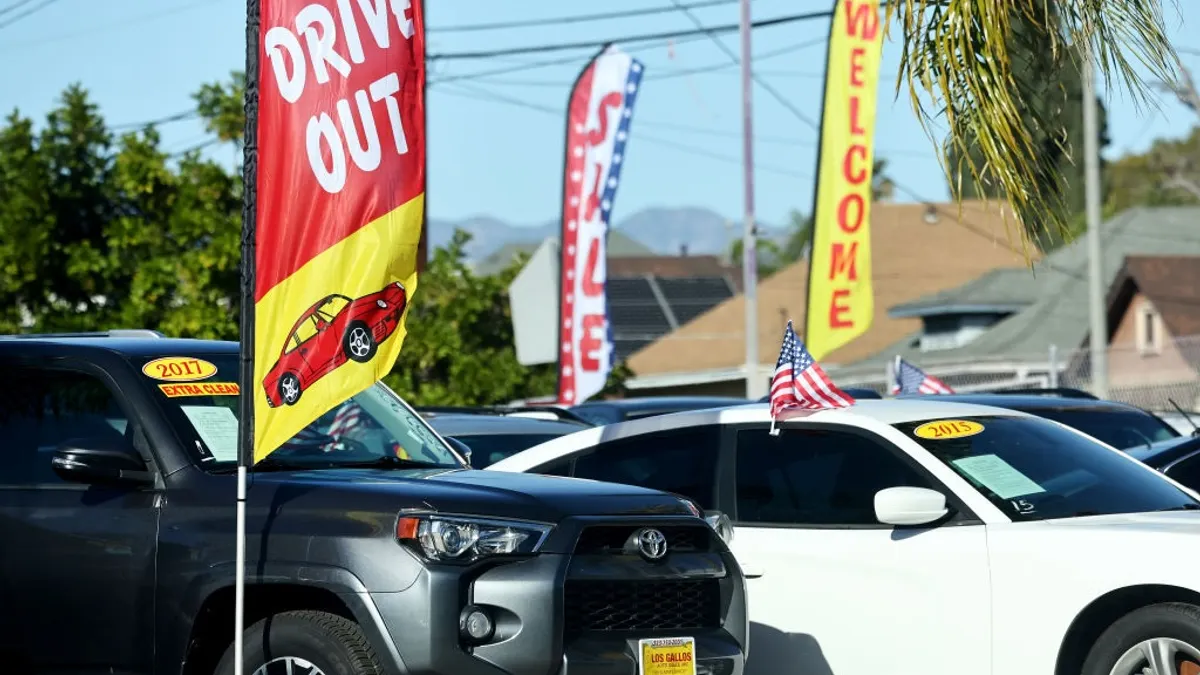
Dealer-auction prices for used vehicles climbed in February, especially in the luxury segment, according to the latest Manheim Used Vehicle Value Index for February 2026.
The index, which represents used-vehicle prices adjusted for mix, mileage and seasonality, reflected a 4% increase versus February 2025, corresponding to a 4.2% hike in non-adjusted wholesale prices year-over-year. That followed a 2.4% increase in January 2026 versus year-earlier levels.
Meanwhile, what Jeremy Robb, chief economist for Manheim parent company Cox Automotive, called “recent geopolitical events” have introduced new risks to the economy.
A riskier economy could “put a damper on consumer appetite in the short run, as people digest the news in the Middle East,” Robb said in a March 6 report.
All that aside, high auction prices mean dealers likely will continue to work on “self-sourcing” as many used vehicles as possible — meaning acquiring them through trade-ins, lease returns, customers in their own service lanes, and off-the-street purchases.
For example, AutoNation Inc. self-sourced “more than 90%” of its used-vehicle inventory in 2025, the company said in its Q4 2025 report, published Feb. 6. AutoNation CEO Michael Manley said self-sourcing, as opposed to buying pricier cars at auctions, helped the megadealer chain offset higher costs in some other areas, such as lower OEM incentives on new cars.
“We’ve been able to offset some of that cost pressure through mix changes as well, in terms of how we source vehicles,” Manley said in an earnings conference call.
David Smith, chairman and CEO for Sonic Automotive, said self-sourcing used cars is a priority for 2026.
“Going forward, we remain focused on increasing our mix of non-auction sourced inventory to benefit consumer affordability, and retail sales volume, and GPU,” Smith said in a Feb. 18 conference call. GPU stands for gross profit per unit.
In the February Manheim Index report, the luxury segment was up 4.1% versus a year ago, Manheim reported. Used electric vehicles also increased in February – not as strongly, but an increase of 1.8% versus a year ago.
The increase in prices for used luxury vehicles and used EVs could be the flip side of softer demand for new luxury vehicles and new EVs. Both of those new-car segments are experiencing acute affordability problems.
That’s especially true for new electric vehicles, which lost the benefit of a $7,500 federal tax break for EV purchases after Sept. 30, 2025. Some luxury imports are also experiencing price hikes related to import tariffs, analysts said.
In February, Penske Automotive Group reported that U.S. sales of its German luxury brands were down 20% in the fourth quarter compared with a year ago. And Lithia Motors said in its February FY2025 earnings call that sales of its luxury brands were down 12.7% in the fourth quarter versus a year ago.
On the positive side, franchised dealerships are about to experience an increase in lease returns, reflecting a comeback in leasing three years ago. That should be a big advantage in self-sourcing desirable used cars, since the selling dealer gets first dibs on lease returns.
Jeff Dyke, president of Sonic Automotive, said his group is planning to “leverage the heck out of that, as lease returns begin to come back.”